What You Need to Know About LTL in the Trucking Business
Trucking services come in different forms to serve diverse needs and unique markets. If you’re in the steel retail industry, the Full Truck Load (FTL) service is perfect because your transport needs will most likely require a full freight trailer.
Equally, there are special haulage needs that cannot be based on filling a trailer. For example, refrigerated trucks serve industries that deal with perishable goods like fruits or temperature-sensitive products like chemicals and pharmaceuticals.
It’s also prudent to consider a unique service like Intermodal Freight Shipping that integrates rail and trucking to yield savings and convenience. That said, let’s explore LTL (less-than-load) trucking that is ideal for the over 28.7 million small businesses in the US.
What Is LTL Trucking?
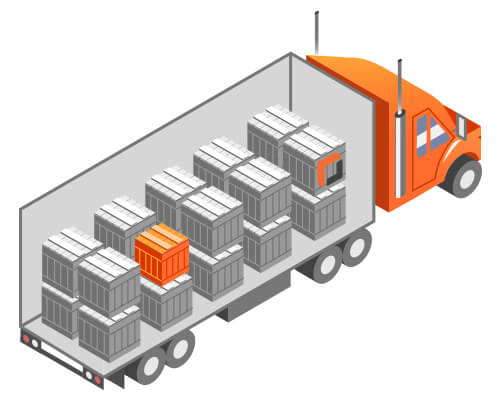
LTL trucking serves customers whose transport capacity can’t fill an entire trailer. In measurement terms, it takes goods that occupy between 1 to 10 pallets or those that weigh less than 15,000 pounds. In comparison, an FTL haulage can consist of up to 30 pallets and weigh up to 45,000 pounds.
Due to the size of the load, an LTL user utilizes a small portion of the trailer, leaving extra space to be shared with customers. The truck doesn’t travel directly to the destination and may also involve transfers in pursuit of speed and convenience.
Sometimes the LTL providers carry less than the capacity to mitigate instances of stock-outs on its customer base. Equally, the service can attract high cost or extended delivery time, although these factors depend on inventory size.
The LTL service aggregates the transport requirements of different customers, a system referred to as an assembly service. Instead of paying for an entire truck, the assembly model results in considerable savings for business owners. Even so, LTL requires a great deal of coordination and planning to fulfill customer orders and attain maximum profitability.
Different Freight Classes in LTL
Freight class is one of the main factors that determine the cost of LTL trucking. The National Motor Traffic Association(NMTA) created 18 classes ranging from 50 to 500 to categorize different products and commodities. Consequently, the carriers create price tariffs based on the predetermined freight class.
In a nutshell, lower-class freight costs less because they are denser and easier to manage. Higher class freight is less dense and takes up more space, so it attracts a higher rate.
Here are characteristics that determine the LTL freight class.
- Handling: The majority of cargo is easy to handle and doesn’t require special machinery. However, other goods are difficult to handle due to weight, hazardous content, shape, and fragility. Loads that require special handling take up high class, whereas normal handling assumes a lower class.
- Density and Volume: Density is the space that a load occupies compared to its weight. Goods like fruits that weigh 50 pounds per cubic meter are classified as 50, whereas loads that are less dense, weighing 1 cubic meter per foot, are classified as 500.
- Liability: Liability is a risk factor that considers susceptibility to damage, theft, or damaging adjacent goods. Any cargo that is perishable or likely to explode is assigned a fraction of the carrier’s liability, expressed in value per pound.
- Difficulty in Loading/Carrying: Goods that are difficult to load or package add to the high cost of transport or handling. As such, cargo with excess weight, length, or shape is classified higher to match a higher tariff.
A point to note: Less-than-truckload service has gained popularity with the rise in e-commerce/online stores. LTL is the ideal trucking model from distribution centers to retail stores.
Try Our LTL Services for Your Fresh Produce Deliveries
LTL is an excellent service that not only increases convenience but also reduces the cost of doing business. Even though a precise classification from NMTA guides freight classes and tariffs, it can’t guarantee quality. It’s therefore vital to work with a service provider that understands your business.
Big Sky Trading is the ideal partner for your fresh produce LTL needs. We specialize in additional services like sourcing, storage, and warehousing. Contact us today to learn more.